
The assault on cultural figures as part of the United States blockade against Cuba has ramped up in recent years, but the last few months have seen these politicised attacks played out in Europe as well as the US. What’s going on?
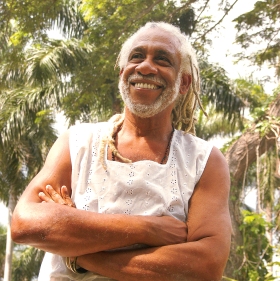
The Obama administration and the so-called “normalisation process” from 2015 enabled a brief bubble of intercultural activity such as festivals, conferences and tours. Cuban state-funded national institutions for arts, music and cinema took part in events alongside US institutions. Artists and musicians living on the island were able to perform and show alongside those in the US. The Kennedy Centre in Washington hosted 400 US and Cuban artists in concerts and exhibitions. (This included the famous Cuban artist Manuel Mendive, whose painting ʻThe Peacock’ was burned in 1988 in a Miami street by the buyer, a member of the Bay of Pigs Brigade 2506, who accused the artist of being sympathetic to the Cuban government.)
A lot of hope rested on that Obama-era exchange, despite the fact the US blockade largely persisted, with Cuban artists still not able to be paid if contracted via their agent in Cuba. Meanwhile the overall damage by the blockade to the culture sector on the island continued to cost $20-35 million a year. Then in October 2019 Trump banned the federal government from financing any educational and cultural exchange activities with Cuban state officials and entities, heralding targeted attacks on artists from the island.
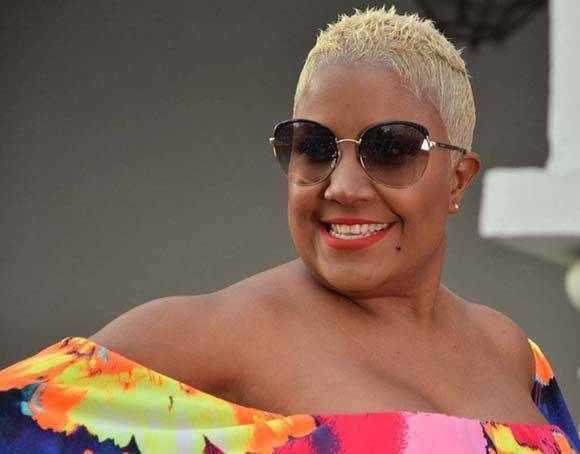
In December 2019 the mayor of Miami, Francis Suarez, demanded that Cuban musicians, including reggaeton duo Gente de Zona (who only in 2016 had been given the key to the city) be excluded from the list of participants in an end-of-year concert. Other Cubans such as Micha and singer Haila María Mompié were also excluded from events in Miami. This new targeting of artists from the island who had not dramatically denounced their government encouraged online abuse.
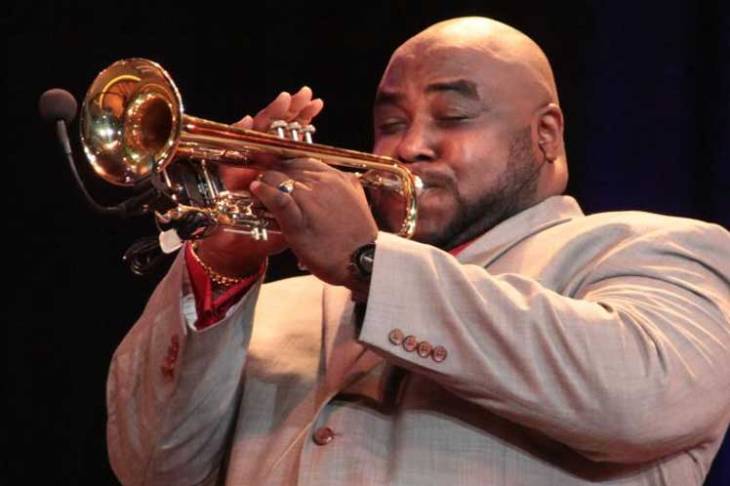
In September 2020 musician Alexander Abreu (of Havana D’Primera) made public that he received 1,000 text messages with abuse ranging from racist tropes to being treated like a war criminal, after a campaign to discredit him in the US published his number. “The only thing I want to say to all those who write with such hatred, is that I have a heart full of love and music,” said Abreu.
In September 2021, calls to boycott concerts by singer-songwriter Silvio Rodríguez in Spain were circulating on social media networks.
Of course, during the last ten years and more, the US government, via USAID and the National Endowment for Democracy (NED), has spent many millions of dollars to try to cultivate anti-government Cuban musicians, artists, and journalists. The NED was established in 1983 under the watch of then CIA director William Casey to provide support to opposition activists and media outlets wherever the US seeks regime change. The coordinator of the NED-funded Cuban Democratic Directorate, Orlando Gutierrez, is an outspoken advocate of the destabilisation of Cuba. Since 3G internet reached Cuba in 2018 and Cubans were able to access the internet via mobile phones, investment was turned to propaganda via social media. In 2021 the NED allocated more than $5.4 million for 40 projects relating to influencing news reporting, journalism, writers and artists in and about Cuba. Many Cuba news websites registered outside of Cuba are actually funded directly or indirectly by the NED.
In October 2020 Fernando Leon Jacomino, Cuba’s Vice Minister for Culture, explained: “What has been happening recently has been the extreme politicisation of cultural exchange. Cuban artists are being victimised for the simple fact of having decided to live in Cuba. It is extremely unfair and they are being discriminated against for supporting their country.
“What has been happening is data-mining of Cuban artists’ online presence, finding every photo of the artist alongside a Cuban leader, there is a whole media machine in the US that converts these ‘offences’ into ‘crimes’ – and the artists are then pressured into denouncing the Revolution. It is no longer enough for the artist to say nothing about politics: there is now a demand that these artists must speak out against the Revolution and speak out more strongly and more offensively.”
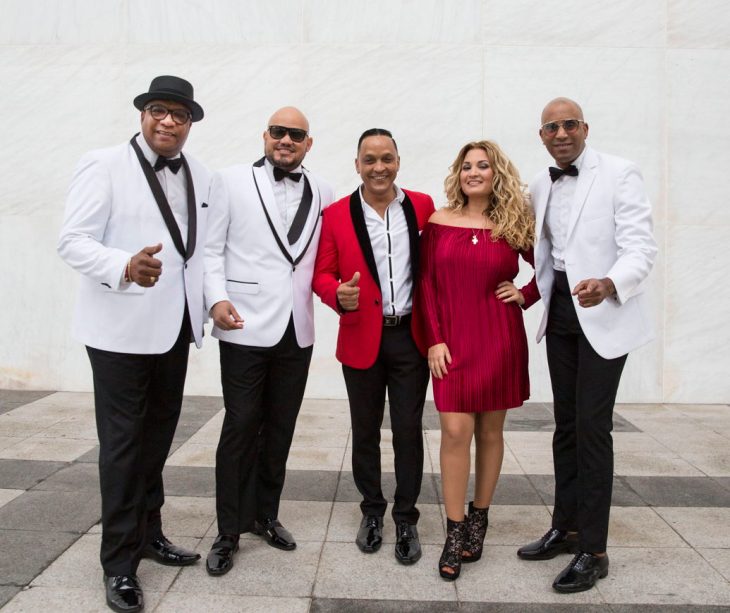
When Los Van Van performed its first-ever Miami show in 1999, protesters harassed and threw objects at attendees as they entered the venue, but the band continued to be asked back. In May this year Miami Beach Commissioner Alex Fernandez, a Cuban-American, claimed in a tweet: “For decades Los Van Van have used their musical talent to promote the Cuban tyranny and its violation of basic human rights… I am grateful to the [venue] for cancelling this offensive concert.” Obviously absurd accusations of Los Van Van, one of Cuba’s most popular bands ever, on the island and abroad. Gente de Zona were able to change their fortune (and earn one) in Miami by moving to Florida and making the anti-Cuban government song ‘Patria y vida’ in February 2021.
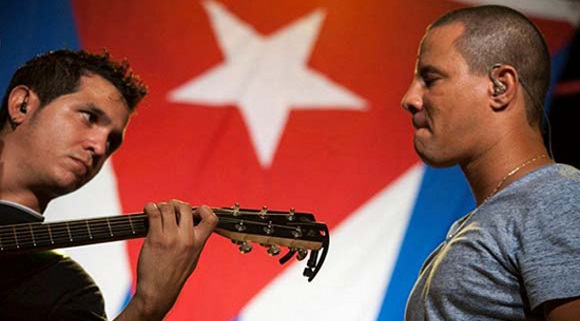
In May 2023, two concerts of Cuban trova duo Buena Fe were cancelled during their tour of Spain after venues were threatened. Following the cancellations, singer Israel Rojas explained in an interview with Mexican press La Jornada: “There are a number of media platforms that dominate everything related to Cuba on the internet and they are managed from outside the island with a specific agenda against the Cuban government. It is a system of media that largely prioritises the artistic or personal assassination of any artist who has artistic capital or power within the country and who does not oppose the Cuban government. Buena Fe has clearly had a position of constructive criticism of the Cuban process. We have not been, you could say, kind to the government, but we also understand that this criticism has always been constructive and not to endanger the independence and sovereignty of our people. Yes, we are committed to the construction of socialism, of a better society, with the lifting of the blockade and with the need for an unconditional understanding between Cuba and the United States…
“We have not given into these pressures and we refuse to distort our music. We make trova music and this has always been linked to social processes, so it would make no sense that someone who follows in the footsteps of Silvio Rodríguez or Pablo Milanés does not have an opinion of his own and remains silent. And these attacks against us began around 2010, but in recent years they have become ferocious… they want to show that there is no one who supports the government, and they attack us because we are one of the few groups that do not give up. Our show is not political, we do not do a militant concert, in fact many of our songs have a high dose of criticism of the Cuban social reality. We do not praise Fidel or Lenin or Evo Morales or Hugo Chávez. We talk about love, reconciliation and peace.”

On 1 June, the Marché de la Poésie (Poetry Market), an international literary event due to take place on 7-11 June in Paris and celebrating its 40th anniversary this year, withdrew an honorary presidency from celebrated Cuban poet Nancy Morejón. The decision followed pressure from the French Pen Club based on spurious claims by Jacobo Machover, a Cuban-French writer who throughout his career has used his platform to attack the Revolution and the Cuban people. Ironically, the Marché de la Poésie had chosen the Caribbean to be the ‘guest of honour’ for the first time ever.
The Cuban government headed by President Miguel Díaz-Canel and Foreign Minister Bruno Rodríguez denounced a hate crusade against the culture of Cuba, and supported the poet. The Union of Writers and Artists of Cuba (UNEAC) and Casa de las Américas also condemned the campaign. UNEAC president said the campaigners “appealed to tired platitudes in the attacks against artists and intellectuals who live and work among us, that do not forgive loyalty and dedication to their people and culture.” Nancy Morejón herself said “I regret that hatred ended up imposing itself on art.”
Cuba50.org


You must be logged in to post a comment.