
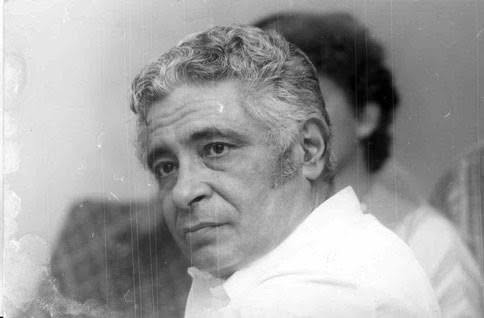
There are works in the history of Cuban documentary filmmaking that are essential. Historia de un ballet (1962) is one of them. Even today, the way José Massip transformed the record of the creative process behind Ramiro Guerra’s Suite Yoruba into a piece of exceptional artistic stature remains astonishing. The editing—the interplay between images of profound documentary value and the choreographic structure—gave rise to a unique cinematic language. As we mark the centenary of his birth, it is worth revisiting the work of a creator who knew how to articulate cinema and history with singular mastery.
José Massip (1926–2014) never viewed history merely as a chronicle of events. Films such as Páginas del diario de José Martí (1971) and Baraguá (1986) reveal a constant desire to understand the past through emotion, reflection, and artistic creation. In these works, documentation and recreation engage in a dialogue, offering a vivid perspective on some of the nation’s pivotal moments. It is no coincidence that Alejo Carpentier considered Páginas del diario de José Martí to be Massip’s greatest work.
This approach to history was accompanied by a restless creative spirit. Massip was never content to simply illustrate events or repeat formulas; he constantly sought new avenues of expression, convinced that cinema could also generate knowledge.
As critic Juan Antonio García Borrero has noted, this was a key aspect of a body of work that transformed the art of cinema into a way of reflecting on the country itself.
His creative endeavors went hand in hand with an intense intellectual life. He was a founder of ICAIC and actively participated in debates regarding culture and its role in Cuban society. He wrote frequently, gave lectures, and consistently championed a cinema committed to memory, reflection, and national identity.
His legacy extends beyond the history of Cuban cinema. It continues to engage with the present because his films invite us to view historical processes with sensitivity, rigor, and a critical eye. In an era often dominated by immediacy, this commitment to understanding—rather than simplifying—takes on renewed value. A hundred years after his birth, it is worth revisiting his films. They reveal a creator who turned history into the living substance of cinema and demonstrated that art can be, at once, beauty, memory, and knowledge.


You must be logged in to post a comment.