

In December 2023 at the Havana film festival (formally the 44th International Festival of New Latin American Cinema) Mexico, Argentina and Cuba shared the main prizes. Important awards were also won by the Brazilians.
The Wild Woman, by Alan González, Cuban director’s first feature, picked up many awards: Mégano Award of the National Federation of Film Clubs, Cine Plaza Award, that of the Culture Circle of the Union of Journalists of Cuba, the Súmate award for a life without violence, the cybervote on the website of the Foundation for New Latin American Cinema.
It also won the Special Jury Prize in the first film category, “for its approach to a real story from femininity and motherhood; for the excellent work of its leading actress Lola Amores.” In addition, it won the Signis award, and thus became one of the Cuban films that has obtained the highest number of mentions in the list of awardees.
The Wild Woman had its world premiere in the Discovery section of the Toronto Film Festival, then participated in the Filmar in Latin America space, and later opened the Latin American Film Festival in Ceará, Brazil, where it won the award for best film and best actress (Lola Amores).
Watch the trailer in Spanish
The first feature jury gave the Choral Award to Lillah Halla’s Levante (Brazil), “for its treatment of the conflict of individual freedom and the choices we should all have about our future.” Levante was the winner of the Biarritz Festival’s top prize, the Embrace for Best Film, and was also selected, and awarded, in the critics’ week at the Cannes Film Festival.
Among the first films, there was a third prize, for the best artistic contribution, for Sin corazón (Brazil) written and directed by Nara Normande and Tiao, and which the jury awarded, as explained in Acta, “for the recreation of the adolescent universe, for the freshness and empathy with which the film approaches the conflicts of our children and young people with social inequalities”.
Heartless was presented in the Orizzonti section of the Venice Film Festival. The film is produced by Kleber Mendonca Filho, and is inspired by the short film of the same name awarded in the Directors’ Fortnight at Cannes 2014.
Despite the fact that Felipe Galvez’s The Settlers (Chile) won the FIPRESCI award in the Un Certain Regard section of Cannes; the award for best screenplay in Lima, that of the French Union of Film Critics, and is the Chilean candidate for the Oscar, in Havana it went blank, except for the Glauber Rocha Award, awarded by Prensa Latina. This institution also recognized with a mention the Cuban film A Night with the Rolling Stones, by Patricia Ramos.
Regarding the awards that continue to be the main ones, those for fiction feature films, Tótem (Mexico), the second feature film by Lila Avilés, won not only the Coral Award for best film, but also triumphed in the specialties of art direction and screenplay.
Most of the other main awards went south, to Argentina: Special Jury Prize for The Rise of the Human 3, written, produced, edited and directed by Eduardo Teddy Williams, and which has already been awarded the Golden Boccalino at the Locarno Festival, participated in the Wavelength section of the Toronto Festival; won the award for best Latin American film in Mar del Plata, and was chosen as the best film in the Zabaltegi-Tabakalera section.
The award for Best Director, Cinematography and Editing went to Los Delincuentes (Argentina) written and directed by Rodrigo Moreno, which months earlier was selected to compete for the Oscar, after winning the award for best film at the Gent Festival, the Silver Hugo in Chicago, and competing in Un Certain Regard. of Cannes.
Also from Argentina comes The Wind That Sweeps (Argentina), selected by the specialized press that was accredited in Havana. Before being recognized in Havana, Paula Hernández’s film was part of the Toronto Centrepiece and was later chosen to inaugurate the Horizontes Latinos in San Sebastian.
The Stranger (Brazil) by Flora Dias and Juruna Mallon, won the Coral for Best Sound, and the Colombian film The Other Son (Colombia) written and directed by Juan Sebastián Quebrada won the awards for acting, female and male, with the awards for Miguel González and Ilona Almansa.
The Other Son was chosen to compete in the New Directors section of the San Sebastian International Film Festival, and won the award for Best Latin American Film in Mar del Plata. It won two of the main awards in Rome, Best Independent Film and Best Actor (Miguel González) and represents Colombia at the Goya Awards.
And if it is not for the award of the Cuban Association of the Cinematographic Press, Eureka (Argentina) by Lisandro Alonso would have had no award. The film arrived in Havana with an impressive curriculum: it was part of the official selection of the Cannes and Lima festivals, where it was awarded the Special Jury Prize, and the honourable mention of the international critics. As a co-production with several European countries, it was also nominated as one of the best films of the Old Continent at the Seville Festival, and competed in Gijón, where it won the distribution award.
Regarding other categories and awards, the post-production award, one of the most important of the Festival, corresponded to the Peruvian project La casa de las galletas, by Rodolfo Zavala, while Brazilian animation imposed its quality in the respective competition and the awards for the best animated feature film (Motherboard) and the Special Jury Prize went to that country: Teca e Tuti, a night in the library.
The South American giant also took over the awards in the fiction short or medium-length film competition: Paraíso Europa and Déjalo won respectively the maximum Coral and the Special Jury Prize, while in the short or medium-length documentaries, Cuba won again with Al final del camino, by Ariagna Fajardo, also winning the audience award through the Foundation’s cybervote and Cubavisión Internacional’s award for best documentary.
Argentine cinematography was also deserving of the highest award for documentary feature film with The Trial, by Ulises de la Orden, while the Special Jury Prize went to El eco, by Salvadoran filmmaker Tatiana Huezo (The Tempest) who arrived in Havana after being chosen for best documentary and best director at the Berlin Festival; as well as winning the audience awards at the Morealia and Biarritz festivals.
Only the Foundation’s Cybervote award reached Maité Alberdi’s La memoria infinita (Chile), which is nominated for the Goya Award for Best Documentary, and also won the Forqué Award for Best Latin American Feature Film in Spain. In the United States, it was awarded the Grand Jury Prize at Sundance, the Knight Award for Best Documentary in Miami, and was voted the best in its category by the Critics Choice Documentary. In addition, it triumphed at the Lima, Tel Aviv, Stockholm, and Athens Festivals.
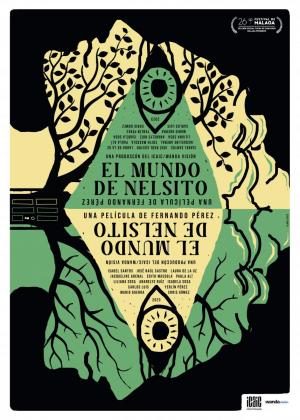
Returning to Havana, the Coral Award for Best Poster chose the corresponding poster of the film El mundo de Nelsito, by designer Vladimir Pérez, “for integrating a complex polysemic image, with a strong visual impact and a reversible graphic game between illustration, color and typography.”
Coral Award for Best Unpublished Screenplay to An Old Man Without Documents, written by Edgar de Luque Jácome (Colombia) “for its effectiveness in the use of comedy to assume a Kafkaesque and reicident reality that wears us all down equally. For the creation of a character who, by not giving up, gives us a hopeful story.”
See original report by Joel Del Rio for CubaCine in spanish
See all the awards on the festival website here
About the Havana International Festival of New Latin American Cinema
“Dear brothers of Our America: in Havana, capital of Cuba, we began today, December 3, 1979, the first International Festival of New Latin American Cinema.” With these opening words spoken by Alfredo Guevara, manager and president of the Festival, a dream of Latin American cinema began to come true.
Conceived as a continuation of the Viña del Mar (1967 and 1969), Mérida (1968 and 1977) and Caracas (1974) festivals, which brought together films and filmmakers representative of the most innovative cinematographic trends in Latin America, the International Festival of New Latin American Cinema was the definitive response to the urgent demand for a space that would guarantee a systematic encounter between the continent’s cinematographies and their creators.
The Festival aimed to “promote the regular meeting of Latin American filmmakers who, with their work, enrich the artistic culture of our countries…; ensure the joint presentation of fiction films, documentaries, cartoons and current affairs…, and contribute to the international dissemination and circulation of the main and most significant achievements of our cinematography.”
Since then the Festival has set out to recognize and disseminate cinematographic works that contribute, based on their significance and artistic values, to the enrichment and reaffirmation of Latin American and Caribbean cultural identity.
Annually the event calls for Fiction, Documentary and Animation Contests, First Films, Unpublished Scripts and Posters. In addition, meetings and seminars are organized on various topics of cultural and, especially, cinematographic interest. Likewise, the Festival program hosts a wide and representative sample of contemporary cinema from the rest of the world.
 Cuba 50
You must be logged in to post a comment.